
Water restrictions remain despite wet weather
All of the water use restrictions – colloquially known as hosepipe bans – introduced by water companies over the summer remain in force, despite widespread rainfall in recent weeks.
According to the Environment Agency (EA), England received a third of average rainfall for September in the first eight days of the month, ranging from 14mm in the east to 46mm in the north-west.
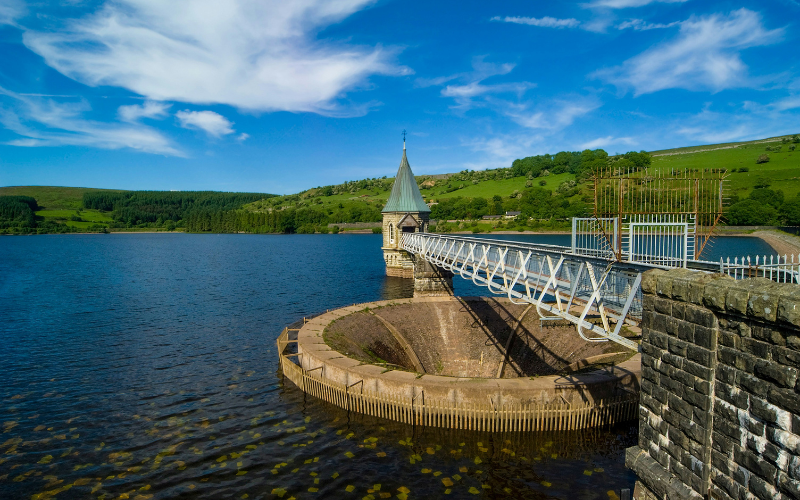
However, water levels have continued to decline at the majority of reservoirs in recent weeks, with stores 20% lower than average for this time of year.
Moreover, as reported by the BBC, new EA research suggests that above-average rainfall is needed for the next seven months in order for the country to recover from drought by spring 2027.
Eleven water companies across England and Wales brought in water use restrictions this year, publishing details on their respective websites:
- Affinity Water
- Anglian Water
- Bristol Water
- Cambridge Water
- Essex and Suffolk Water
- South East Water
- South West Water
- Southern Water
- Thames Water
- Wessex Water
- Dŵr Cymru (Welsh Water)
Landscaping impacts
In England and Wales, the power to introduce water restrictions is given to water companies in Section 36 of the Flood and Water Management Act 2010 and expanded on in the Water Use (Temporary Bans) Order 2010.
To complicate matters further, water companies are also signed up to a code of practice on water restrictions, which sets out discretionary exceptions around watering newly laid turf and newly bought plants.
Broadly, the legislation allows water companies to ban various domestic uses of a hosepipe, with specific exemptions for commercial and other non-domestic uses, while the code of practice sets out a number of discretionary exemptions.
However, the laws and code of practice also provide a degree of flexibility and are open to interpretation, so it is always worth checking whether specific water uses are permitted with the relevant water company.
Looking ahead
BALI will continue to monitor developments and communicate any further droughts and water restrictions to members and, in turn, their clients.
Meanwhile, our policy team is renewing efforts to secure greater flexibility for landscaping under water restrictions as well as a more consistent approach across water companies.
For instance, BALI recently joined forces with the Horticultural Trades Association (HTA) to write a letter to the water minister, Emma Hardy MP, calling on the government to improve the way water restrictions are implemented and communicated.
BALI has previously discussed the benefits of sustainable garden design, rainwater harvesting systems, and water solutions more broadly.