Designing through uncertainty: how landscape designers can thrive in a tough market
In a cautious market, landscape designer Adam Vetere (MBALI) shares how creativity, personalisation, and industry collaboration can help designers not just survive, but thrive.
In a profession that balances art, nature, and client vision, landscape design has always been a delicate dance. But for many in the industry, the current market is proving to be one of the toughest backdrops to work against in recent memory. For Adam Vetere, principal at Adam Vetere Landscape & Garden Design, the challenges are real, but so is the potential for innovation, resilience, and meaningful work.
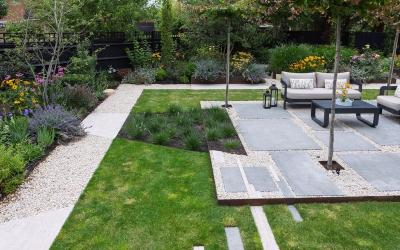
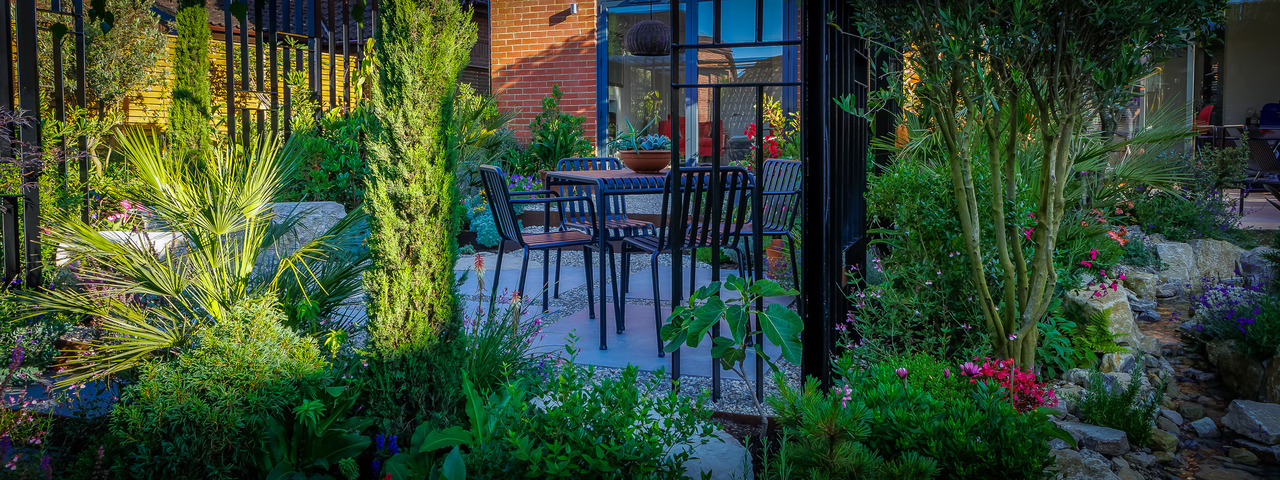
The Quilted Garden - Adam Vetere. ©Ellie Walpole
Personalisation at the heart of design
Vetere is clear that no matter what is happening in the wider economy, a garden should always tell the client’s story.
“We always try to make sure that within the geometry of the design there is always something personal to the client,” he says. “For example, we had a client last year whose mother was a quilter, making bespoke quilts for beds. She unfortunately passed away before she could finish a particular quilt, so her daughter took it up and finished it. She showed us the design and it had this really interesting geometry in it. It was a really emotional anchor, so we took it, dropped it into the 2D space and exploded it, started to play with it. We were then able to incorporate elements into the client’s garden.”
Stories like this highlight the unique advantage designers have, even in a shrinking market. A personal connection transforms a garden from an outdoor space into a legacy – and no amount of economic uncertainty can replace that emotional value.
Staying fresh when trends saturate
Creativity, however, needs constant feeding. Over the past few years, Vetere notes, rock has dominated show gardens and private commissions alike.
"Over the past two to three years, we’ve been creative in using natural and honed rock within our garden design. And I love it – it is a beautiful material, has unique, striking features, and our clients have loved it too. But there seems to be a lot of rock everywhere now. We’ve seen it at Chelsea, we’ve seen it at Hampton Court and it’s gaining in popularity. So, we’ve made a conscious decision to try to look at other ways of using other materials within the garden."
"You have to not only keep up to date with current trends and what’s happening within the industry, but you have to challenge yourself as well, making sure you don’t become stale. It is very easy to get into a mindset of ‘Well we know that works, it’s quick to do, and it can be churned out.’ We don’t do that."
In other words, survival in today’s market isn’t just about weathering the storm – it’s about ensuring the work stays fresh enough to capture attention when clients do decide to invest.
Understanding the pinch points
The financial squeeze is impossible to ignore. "In the current market I see an issue with financial sustainability," says Vetere. "It’s all about barriers to entry. Everything costs a lot of money at the moment."
It’s not just rising costs. The market dynamics have shifted in ways that cut deeply into the bread-and-butter projects many designers relied on.
"A lot of the middle of the market seems to have dried up,” Vetere explains. “Covid was a good time for the industry; everybody wanted gardens, people were moving out of London, they had gardens for the first time and didn’t know what to do with them, so there was more work than you knew what to do with. The problem is, that effectively pulled forward demand from future years. All of those gardens were built, but you can’t keep rebuilding those gardens."
Coupled with redundancy waves in the tech sector – wiping out much of the lucrative £50,000–£70,000 project bracket – and a more cautious "grey economy" of retirees wary about investments, the middle-tier client base has shrunk dramatically.
"There are the much higher-end jobs still around, but there are only so many of those. And with a lot of wealthy people leaving the country… it stops the push of money out from the capital out into the surrounding country."
A slow-burn downturn
Unlike the 2008 financial crisis, which hit suddenly and visibly, Vetere describes the current slowdown as a gradual tightening.
"It’s not been like the 2008 financial crisis when something big happened and it just went down. It’s been slower than that – there are a lot of things coming together right now to create this situation. There’s the energy crisis, Ukraine, Israel–Gaza, Trump’s tariffs and how he’s turned the world upside down economically and geopolitically. It makes people unsure, and in times like this people hold onto their money."
The result? "You’ve got what is effectively a recession from a contractors’ and designers’ point of view."
The importance of industry support
While the economic headwinds are strong, Vetere stresses the role of industry bodies in keeping spirits and standards high.
"That’s one of the reasons why organisations like BALI are so important at times like this. It is all about supporting each other, collaboration, and understanding that you’re not alone."
In a fragmented market, connection matters. Conversations between designers and contractors can lead to shared solutions – whether that’s sourcing more cost-effective materials, pooling marketing efforts, or simply providing moral support.
Finding optimism
So where does optimism come from in such a climate? For Vetere, it’s about perspective and adaptability. The demand for beautiful, meaningful outdoor spaces hasn’t vanished – it’s just evolving. Designers who can connect emotionally with clients, push their creative boundaries, and stay agile in the face of changing conditions are best placed to succeed.
The personal touches – like incorporating the quilt pattern into a garden’s geometry – creates unique, bespoke spaces that clients will prioritise even when money is tight.
Exploring alternative materials keeps work distinctive in a saturated trend cycle, while leaning into professional networks can provide the stability and confidence needed to take calculated risks.
In short, the market may be challenging, but it’s not devoid of opportunity.
As Vetere’s own practice shows, when design is rooted in genuine connection and fuelled by creative curiosity, it can still flourish – even when the economy doesn’t.
Contact: adamvetere.co.uk
Please note: this article was originally published in BALI's Landscape News Autumn 2025 issue. The original article, and more, can be read here.