AI and the future of garden design: Tool, threat or opportunity?
Artificial intelligence is rapidly becoming part of the wider design landscape and, like many creative industries, the garden and landscape sector is beginning to grapple with what that means for the future of the profession.
The launch of AI-powered garden design platforms, including the new Spacelift app showcased at RHS Chelsea Flower Show this year, has intensified discussion across the industry in recent months. While many see opportunities in the technology, there are also growing questions around creativity, authorship, professional value and the role of human expertise in shaping outdoor spaces.
For contractors, specifiers, designers and suppliers alike, the conversation is no longer theoretical. AI is arriving in the marketplace and the industry must now consider how it responds.
Beyond Attractive Images
I believe it is important to distinguish between image generation and professional garden design. Successful garden design is an art form. It is rooted in creativity, collaboration, experience and human connection. While technology may offer useful tools, it cannot replicate the insight, empathy and personal engagement that comes from working with a skilled garden designer to create a living, evolving natural space.
This distinction is significant for everyone involved in the delivery of landscapes. Gardens are not static visual concepts. They are complex environments shaped by soil conditions, drainage, levels, microclimates, maintenance requirements, budgets, planning constraints and long-term use.
Good design begins long before a concept image is produced. It involves listening, observing and understanding how clients want to live within a space and how that space will evolve over time. It also requires close collaboration between designers, contractors, suppliers and specialists throughout the build process.
For contractors in particular, the practical implications are clear. A visually appealing AI-generated layout may not account for construction feasibility, specification detail, levels, planting performance or site realities. Human experience remains essential in translating design intent into successful built landscapes.
AI as a Tool Rather Than a Replacement
Few within the profession believe AI will disappear. The more pressing question is how it will ultimately be used.
The SGLD acknowledges that AI may become a valuable tool for inspiration, visualisation and concept exploration in much the same way CAD transformed drafting and technical drawing. Used intelligently, AI could help streamline certain aspects of workflow, presentation and communication.
It should be viewed as a support mechanism rather than a replacement for professional judgement. AI cannot replace the human understanding, creativity, accountability and experience that sit at the heart of successful garden and landscape design.
This is particularly relevant in an industry built on relationships. Successful projects rely on collaboration between designers, contractors, clients, nurseries, suppliers and consultants. Much of that process involves interpretation, negotiation and problem solving in response to changing site conditions and client needs.
Questions Around Copyright and Creative Ownership
Alongside concerns about professional value, AI is also raising difficult questions around intellectual property and data usage.
Machine learning systems require large volumes of existing material in order to improve their outputs. In the design sector this may include plans, photographs, aerial imagery, planting schemes and completed project documentation.
Many designers are now questioning how this material is being sourced and whether creative work is being used without consent.
Drone photography in particular has become a valuable resource for AI companies seeking detailed visual information about built landscapes. Yet there remains little transparency around how this information is gathered, stored or used to train AI systems.
While the UK benefits from strong copyright laws, uncertainty remains over how effectively existing legislation can protect creative work within AI development.
As designers increasingly share projects online for marketing, awards submissions and client engagement, there is growing concern that publicly available material may unintentionally become part of AI learning datasets.
The issue is likely to become increasingly important not only for designers, but also for contractors and suppliers whose work appears within published project imagery and technical documentation.
The Value of Human Design
Ultimately, the debate surrounding AI has highlighted something the industry perhaps needs to communicate more clearly than ever before: the value of human-centred design.
Gardens succeed not simply because they look attractive in an image, but because they function well, respond to place, evolve over time and enrich the lives of the people who use them.
That process relies on creativity, technical understanding, collaboration and experience across the entire supply chain from designer to contractor to specialist supplier.
AI may change aspects of workflow and visualisation in the years ahead, but the consensus across much of the profession remains clear. Technology can assist the process, but it cannot replace the human insight, accountability and collaborative expertise required to create successful gardens and landscapes.
As the industry continues to adapt, the challenge will not simply be understanding what AI can do but recognising the enduring value of what people do better.
By Andrew Duff MSGLD, garden designer, educator and Chair of the Society of Garden + Landscape Designers (SGLD)
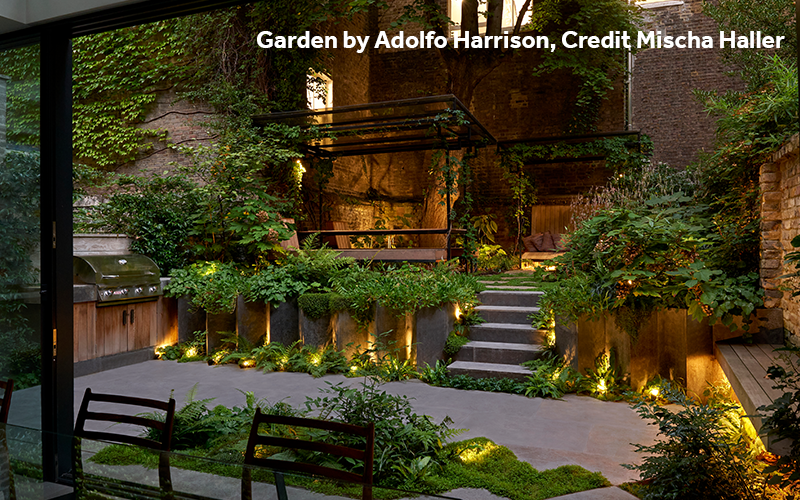
Image courtesy of ©Mischa Haller
Garden design by Adolfo Harrison